
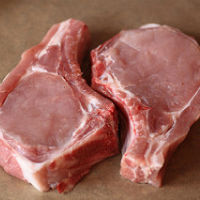
As Jason Hartman loves to say, it’s an amazing time to be alive, and perhaps no recent concept is more representative of that than cultivated meat. This is no longer science fiction. Join in as Jason discusses it with Memphis Meats founder, Dr. Uma Valeti, on episode #63 of The Longevity & Biohacking Show.
Visionary
Dr. Uma Valeti is CEO and Co-Founder of Memphis Meats. Uma is laser focused on advancing the commercial viability of meat farmed directly from real meat cells. A cardiologist by training, he believes that meat that is safe and sustainable should be good for the body and the soul. Uma was one of the early Board members of New Harvest, a non-profit dedicated to advancing cellular agriculture research and mainstream adoption of cultured meat. He has extensive business experience and is an investor in a variety of food and tech companies. In addition to his many contributions in health sciences, he wants his biggest contribution to be leading the development of a profitable and a world positive future food system.
Uma’s Vision – The Beginning
There is no doubt that such a light year leap forward in food technology as Dr. Valeti’s idea-turned-reality of reproducing meat in a lab has to start somewhere. Where did this seed germinate? According to Valeti, it all stemmed from a birthday party he attended in India at age 12. It was at that event he wandered around back and stumbled across the process of an animal being slaughtered. That trauma did it for him. He knew there had to be a better way, though it would be be years later, as an adult, he would have the scientific knowledge to conceive of growing meat in a lab from a single cell.
The Cardiac Chef
As Valeti progressed through his career as a heart doctor, he was introduced to the idea of injecting stem cells as a means of healing malfunctioning organs. He began to wonder about the feasibility of applying the same idea to growing more efficient, safer food.
Obviously, the good doctor has the entirety of human history to overcome in introducing the concept of lab grown meat, and it starts with the term itself. Is it really lab grown meat? Valeti prefers to call it cultivated meat, and essentially no different from other types of meat that are created in more familiar processes around the world.
How It Works
To start the growing process, Valeti takes a single cell sample from a live animal – pork shoulder, tenderloin, etc. When placed in the appropriate environment, it is capable of reproducing itself over time (more on that later) and growing until it is an authentic chunk of meat waiting to be harvested and eaten.
What type of eating experience is preferred by the end consumer? Cultivated meat harvested early results in a tender cut. If you want texture, harvest it later.
What’s the Real Frankenfood?
Jason brings up the term Frankenfood. Does it apply? Dr. Valeti makes an impassioned case of why the corporate/industrial farms that produce 99% of all meat eaten around the world are the real purveyors of Frankenfood. One doesn’t have to look far to find evidence of cattle, chicken, ducks, and more living in cramped, inhumane conditions, force fed into achieving unnatural size. Large meat producers have turned what used to be a hands-on agricultural experience into a conveyor belt food chain.
Industrial farms are able to grow chickens into harvesting size seven times faster than nature, while cattle are forced to grow at ten times normal speed. Cultivated meat uses a fraction of the resources, generates no animal waste, and provides an end product that is markedly healthier to consume.
The preceding paragraphs serve to illustrate Valeti’s point that the vast majority of meat consumed in the world is not raised “naturally.” A natural cut of beef would require the cow to have plenty of pasture upon which to graze freely, and be allowed to grow at a natural rate, then harvested at the appropriate time. According to Dr. Valeti, it would require 10 earths to feed the human race naturally.
The Hunger Solution
As population continues to increase, traditional meat producers find themselves already strained to meet current demand. What’s the plan for the future? Valeti hopes it includes cultivated meats. Such an innovation, if taken to its logical conclusion, could be the solution to feeding all these additional people.
What Will Vegans Think?
Often a person chooses the vegetarian or vegan route because of a resistance to the idea of eating what used to be a living, breathing animal. What will they think of cultivated meat? Who knows, but we will soon find out. Cultivated meat doesn’t result in any loss of life or even create a real animal.
The First Products
After having his mind blown by the implications of cultivated meat, Jason managed to recover quickly enough to ask what we can expect first from Memphis Meats? Valeti said the pioneering products are hot dogs, burgers, sausages, and meatballs.
In fact, the preparation and consumption of the very first meatball can be seen on a video posted to YouTube and the Memphis Meats website (www.MemphisMeats.com).
As to why Valeti claims his meat is cleaner than all the rest, think about it. There’s no poop anywhere in the process. Fecal matter can be introduced at almost any point along the way when you raise animals for slaughter. Fecal matter can lead to e coli contamination, which is something we all should strive to avoid.
Final Thoughts
Cultivated meat tastes exactly like real meat. This early in the industry’s life, it’s a bit pricey at $1,000 but Valeti expects that to drop to a few cents a gram once large scale production is achieved. (Image: Flickr | DrHobo)
More from Jason Hartman:
Self Treatment to Eliminate Chronic Pain
Head Transplants and Synthetic Body Parts
The Longevity Show Team