
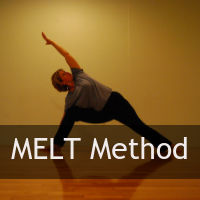
You might have thought you knew a thing or two about hydrating your body but there’s a good chance that, Sue Hitzmann, Jason Hartman’s guest on episode #61 of The Longevity & Biohacking Show, can teach you something about applying her MELT Method to your fascia connective tissue.
The MELT Method
Sue Hitzmann is the creator of The MELT Method, author of the book by the same name, and founder of the Fascia Research Society. Her interest in neuromuscular and manual therapies began when she was in her twenties and on a quest to find relief from her own debilitating pain. Even top doctors and physical therapists couldn’t explain what was going on in her body. In hands-on bodywork, she found solutions she desperately sought. Determined to share this, she changed her focus from fitness to manual therapy and became known in New York City as the person who solved seemingly impossible pain issues.
In 2001, Sue was inspired to create “homework” for her clients, which led to the development of the MELT Method – the first ever form of Hands-off Bodywork.
It’s All About the Fascia
How often do you use the word ‘fascia’ in a sentence? Hardly anyone (except Sue Hitzmann) talks about what might be the most important element of feeling good and being healthy. Let’s get right down to it. The fascia is connective tissue that covers our body, starting from beneath the skin all the way down to the bones. Hitzmann refers to it as a “flexible scaffolding.” Fascia is made of collagen. It acts as a stability system for the body, serving such functions as providing joint shock absorption and keeping bones aligned.
It’s a pretty important system, and guess what? It only works efficiently when properly hydrated. That’s easy, Drink lots of water, right? Not so fast, monkey boy. For the fascia to operate as designed, it’s not a simple matter of slamming down gallons of water every day. For good fascia health, it’s all about movement that creates hydration.
The New Secondhand Smoke?
As Jason puts it, sitting is the new secondhand smoke. That’s a kind of catchy way to say that our modern lives that involve staring into screens of varying sizes hours daily is a health hazard. Ever feel a stiffness after being in one position for a long time and standing up? That’s your fascia trying to adjust itself.
How to Drink Water
Ms. Hitzmann provides an education on how to drink water for the purpose of re-energizing your connective tissues and nervous system. It turns out that you’re better off sipping a gallon of water regularly throughout the day than pounding down three gallons separated by several hours. The latter method overpowers the the dried-out fascia’s ability to absorb water. Most of it meanders through your kidneys and ends up as urine in the toilet.
Frequent sipping, on the other hand, keeps the fascia like a wet sponge, able to easily absorb and make use of the water it receives. Hitzmann suggests drinking 8-10 ounces of water immediately upon waking up. For your daily sipping regimen, add flavors like cinnamon, lemon, or ginger. This opens up your taste buds and makes for easier sipping.
Long Term Fascia Dehydration
So what’s the big deal about cellular dehydration anyway? All you have to do is drink a little water and no harm, no foul, right? If only that were the case. According to Hitzmann, an under-hydrated fascia in your body can manifest itself in premature aging as you get older. This is not to say that, at some age, it’s too late to begin hydrating. Better late than never is always the case.
Let’s Everybody Melt
The MELT Method is Ms. Hitzmann’s centerpiece approach to better health through hydration of the fascia. There are several different ways to introduce yourself to the concepts. She has a blog, a book, and even videos. If you really want to go all out, and have deep pockets, you could probably book her for a personal demonstration.
First you need to figure out what your issue is. For moderate pain, your best bet might be follow the advice on her website and teach yourself how to do the simple movements for ten minutes three times weekly. Those with more complicated systemic diseases are probably going to need the book. The exact moves are beyond the confines of a simple article such as this, but you can expect to learn sequences of lengthening stretches, depending upon the location of your pain, as well as implement balls and rollers to hydrate your fascia.
With the MELT Method it might help to think of your connective tissues as the body’s architecture. When you sit at a computer for hours at a time, it compresses and weakens the architecture at certain points, causing dehydration.
Yoga: Good or Bad?
It’s no secret that Jason has been known to indulge in yoga now and then. He puts the question to Sue: Good or not? Her response is that it can be beneficial if approached properly. The problem is that most people go into a yoga system with dehydrated connective tissue and proceed to strain muscles and tendons through lengthy dramatic stretches. This kind of stretching pulls the fascia nearest the joints without hydrating first.
Her suggestion is to use the MELT Method for 10 minutes prior to yoga, insuring your entire fascia system is ready for the big stretches you’re about to do. The reality is that most yoga practitioners end up being highly flexible (good) but with an underlying joint instability (hyper-mobility = bad). Decreased stability actually makes it more difficult to safely move.
The Final Word
To learn more about the MELT Method, visit Sue Hitzmann’s website at www.MELTMethod.com .
More from Jason Hartman:
The Future of Food: Lab Grown Meat
Recording Your Life With Wearable Technology
The Longevity Show Team